

HENRIETTE NGAKO (1943 – 2021)
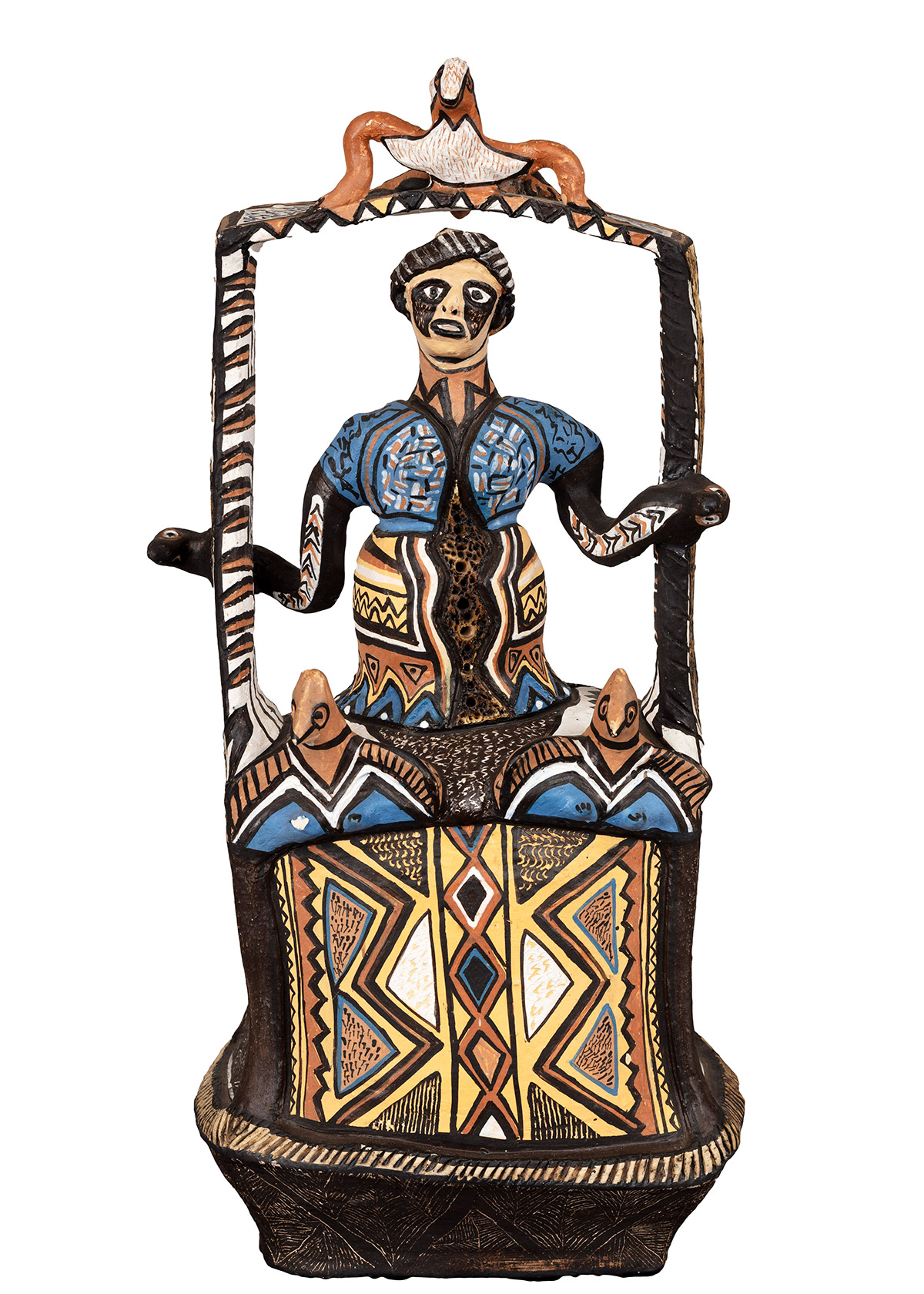
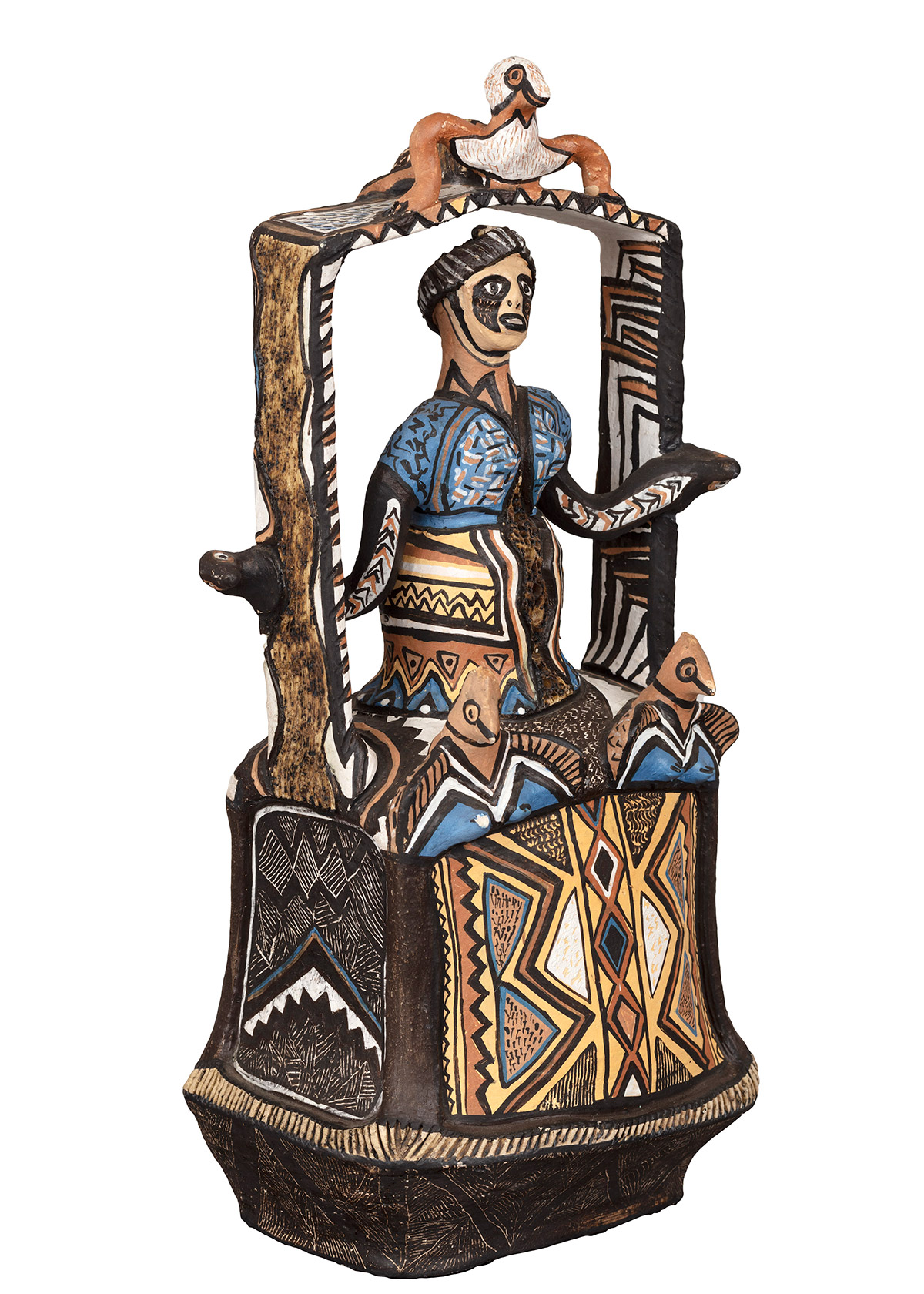
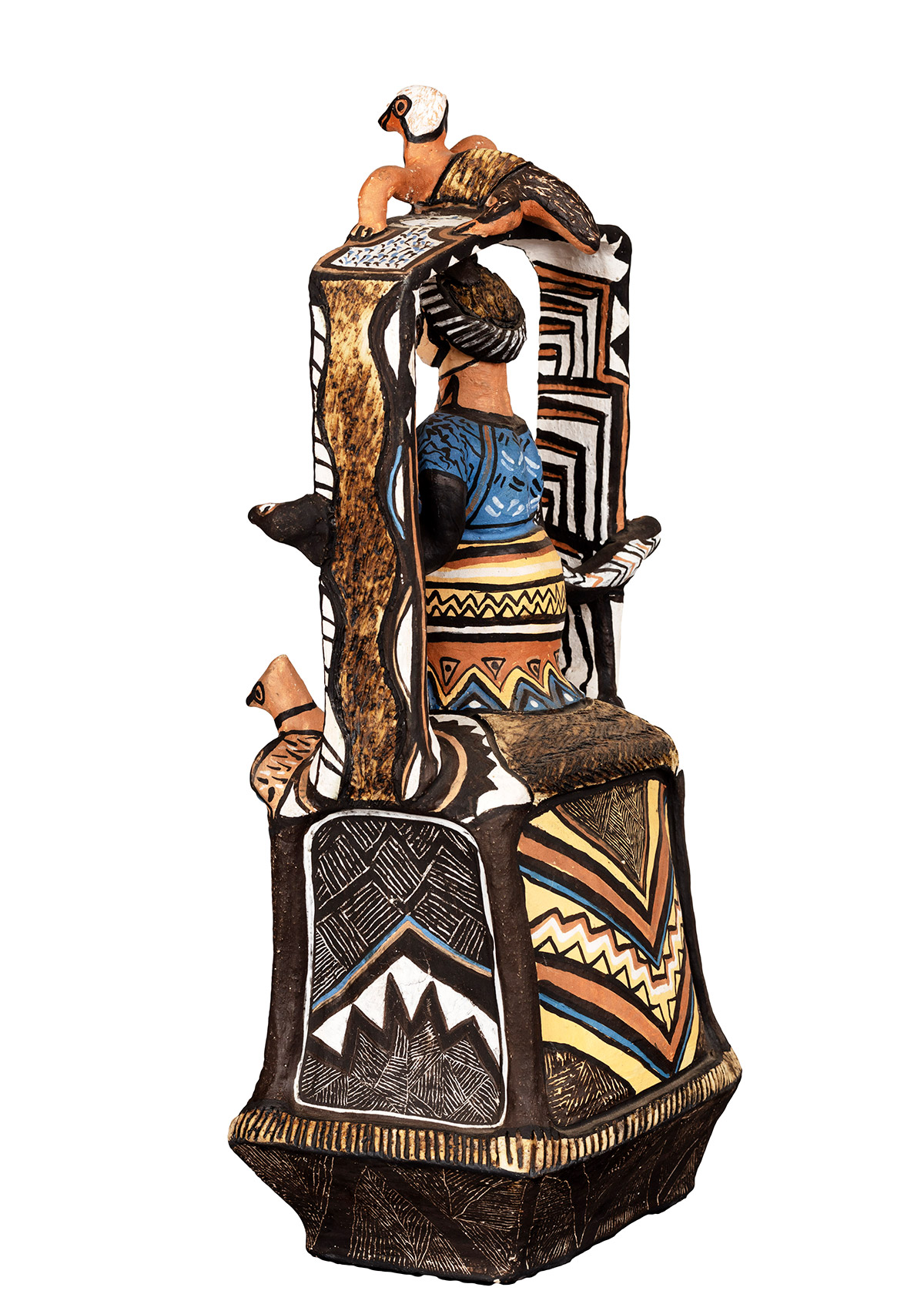
Untitled
1995
ceramic sculpture
26 x 55 cm
BIOGRAPHY
Henriette Ngako was a ceramicist who worked in the medium of ceramic sculpture. Her stacked zoomorphic figures continue to attract attention and accolades today.
Ngako was born in a Batswana village and raised in Hammanskraal, a trans-provincial region anchored in northern Gauteng province. She learned how to make pottery in the Batswana tradition from her grandmother, who would have been proficient in the production of various earthenware vessels for the making and storage of beer, water, medicine, as well as for cooking and serving food, and for use in ancestral ceremonies.
In her expressive narrative sculptures, Ngako depicts figures, animals and mythic beings from her childhood memories, oral history, intangible heritage and imagination. There is often an element of fantasy in her work, for instance in a sculpture that depicts a family (or her forebears) riding on a large birdlike horse. The patterns in her work are a legacy of the Tswana village where she spent her childhood.
Aſter the death of her husband in 1982, Ngako relocated to the city of Pretoria/Tshwane where she found employment in the pottery studio of Willemien van der Merwe. In 1985, after Van der Merwe had closed her studio, Ngako worked with the ceramist Tineke Meijer, who made materials and facilities available to her, offered technical advice, shared reference material, and handled the administration for Ngako’s exhibition entries. Ngako also had a connection with the studio potter Elza Sullivan (1935–2020), whose studio was near Meijer’s in Faerie Glen.
Ngako’s debut as creator of free-standing, figural, sculptural compositions with a totemic appearance, came about in 1988 when her Bird Totem entry for the 1989 Association of Potters of Southern Africa (APSA) National exhibition earned a merit award and was acquired by the Pretoria Art Museum.
Her work went on to receive national and international recognition. In 1992, she earned a merit award at the International Invitational Exhibition of Contemporary Ceramic Art hosted by Taiwan’s National Museum of History, with the museum acquiring her entry, Prayer for Africa.
Ngako’s work featured in Goodman Gallery’s Joy of Making exhibition in 1993 and the following year the gallery hosted her solo exhibition. Also in 1993, she was awarded the senior bursary for visual arts from the Foundation for the Arts. She was the artist-in-residence at the 1995 Standard Bank National Arts Festival in Grahamstown (now Makhanda). Thereaſter, her works were included in group exhibitions in London, New York and Hannover.
Ngako was a joint winner of the Premier Award at the 2002 African Earth Exhibition. However, in subsequent years, her life was characterised by struggle. For long periods, she ceased all production because she had to take on the care and education of her grandchildren aſter the deaths of their parents.
In 2016, an exhibition honouring her 30-year partnership with Meijer took place at the Ceramics and Glass event, hosted by the South African Association of Arts, Pretoria.
Ngako died from COVID–19 complications at the Jubilee Hospital in Themba in mid-2021.
A selection of 14 of Ngako’s works was presented by Riaan Bolt Antiques at the Investec Cape Town Art Fair 2025, re-establishing her prominence as a South African ceramist.