
Milwa Mnyaluza George Pemba (1912 – 2001), Boxers In The Ring, 1985, arylic on board, 52 x 75 cm
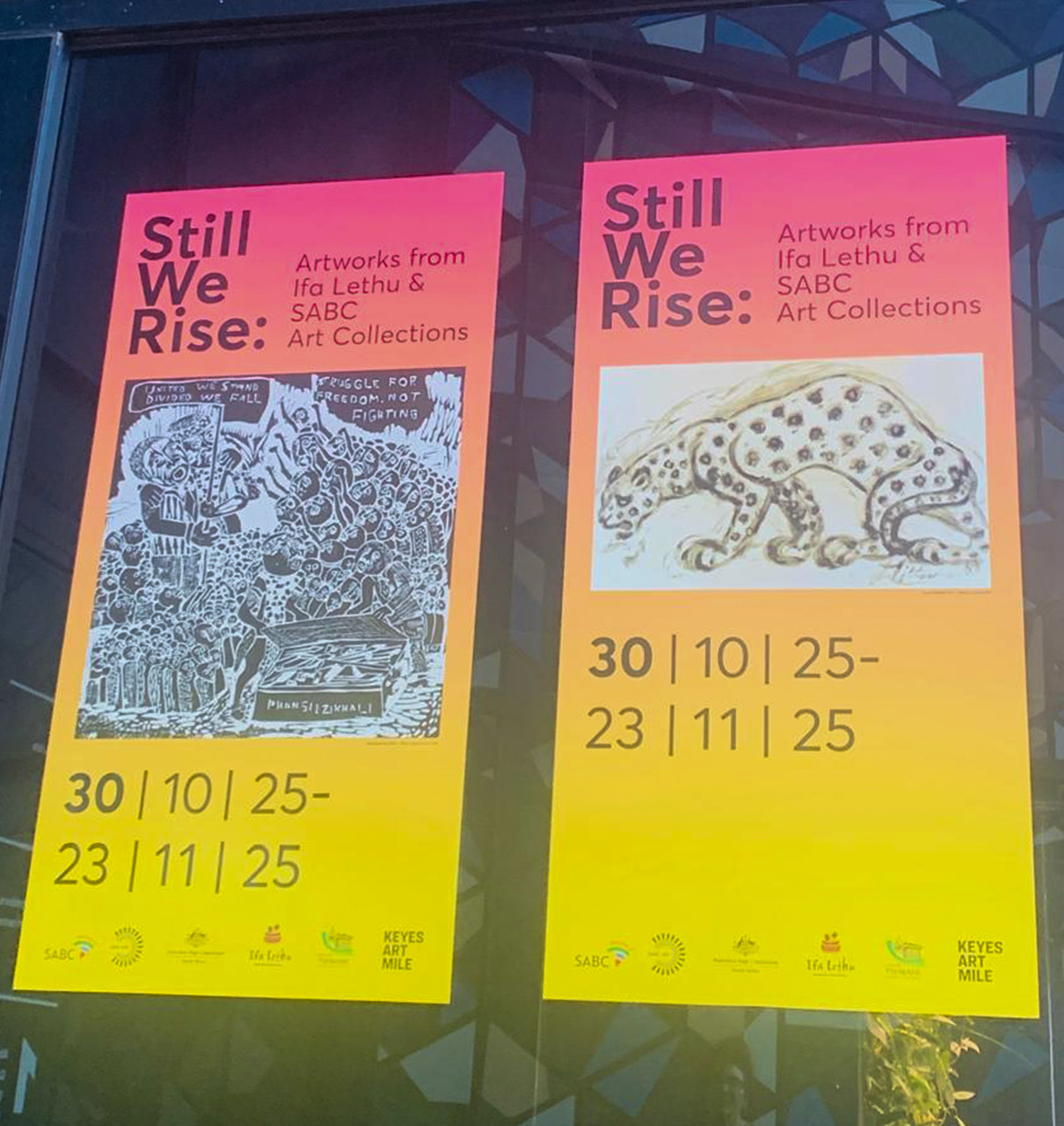
STILL WE RISE
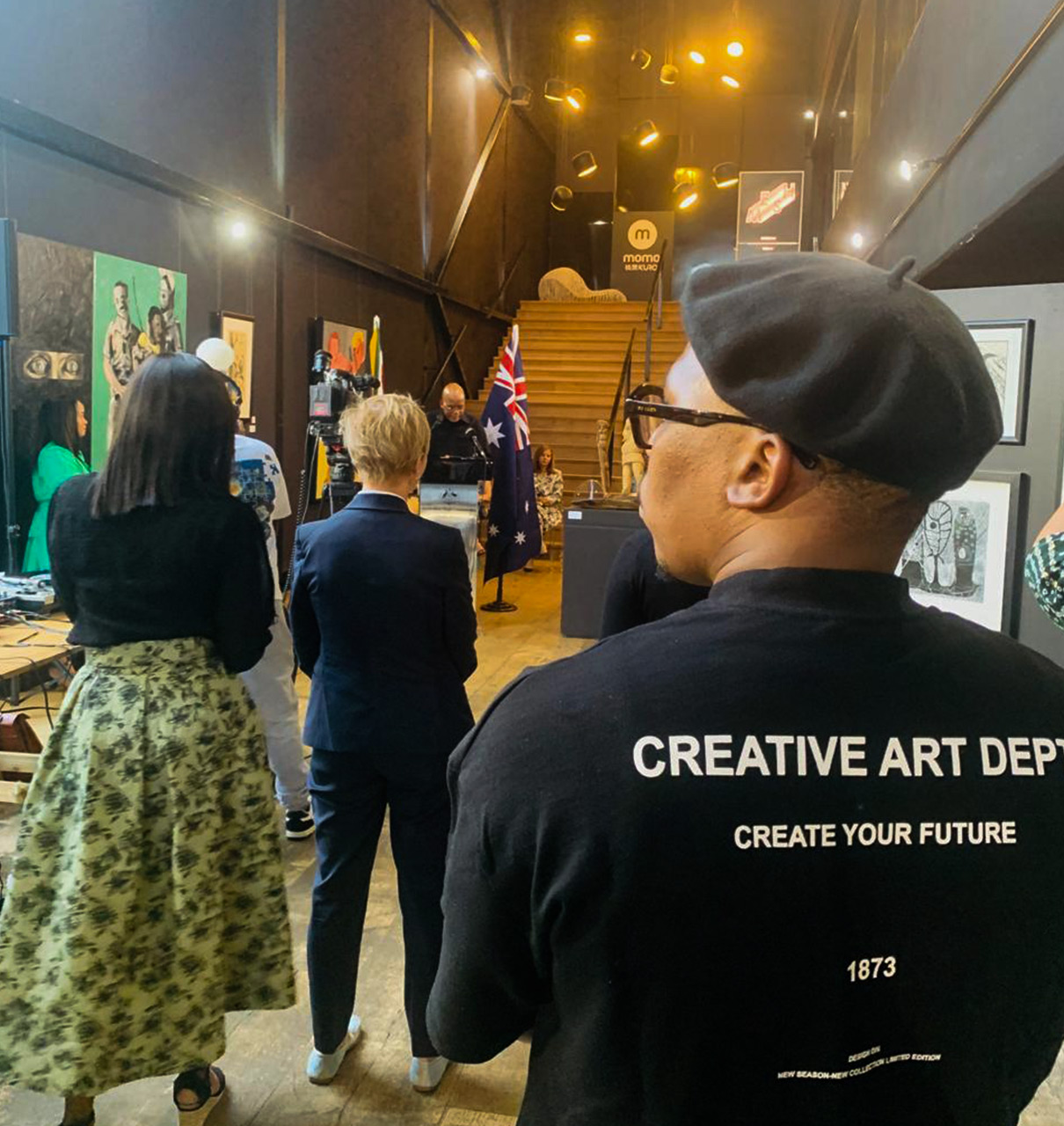
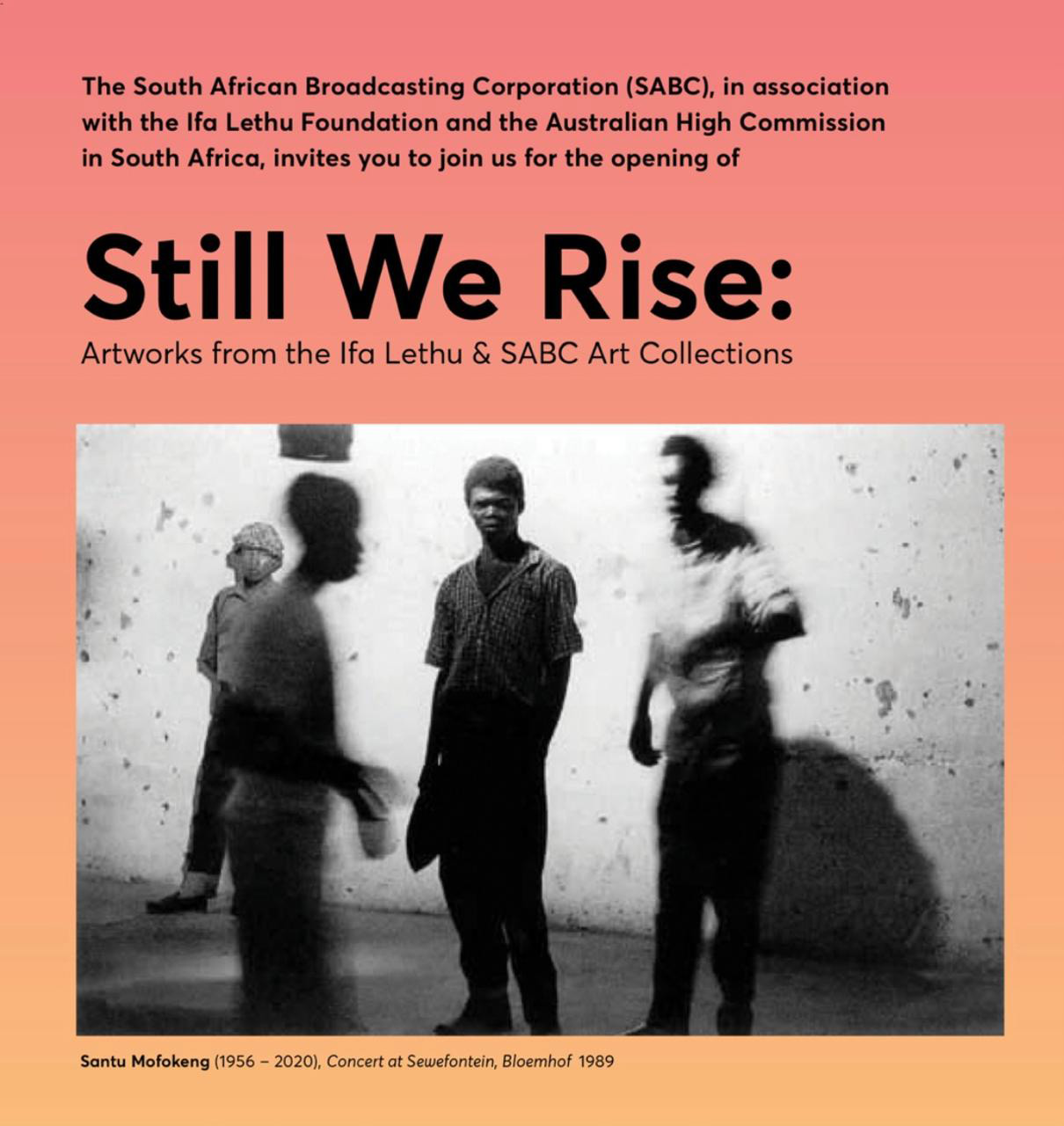
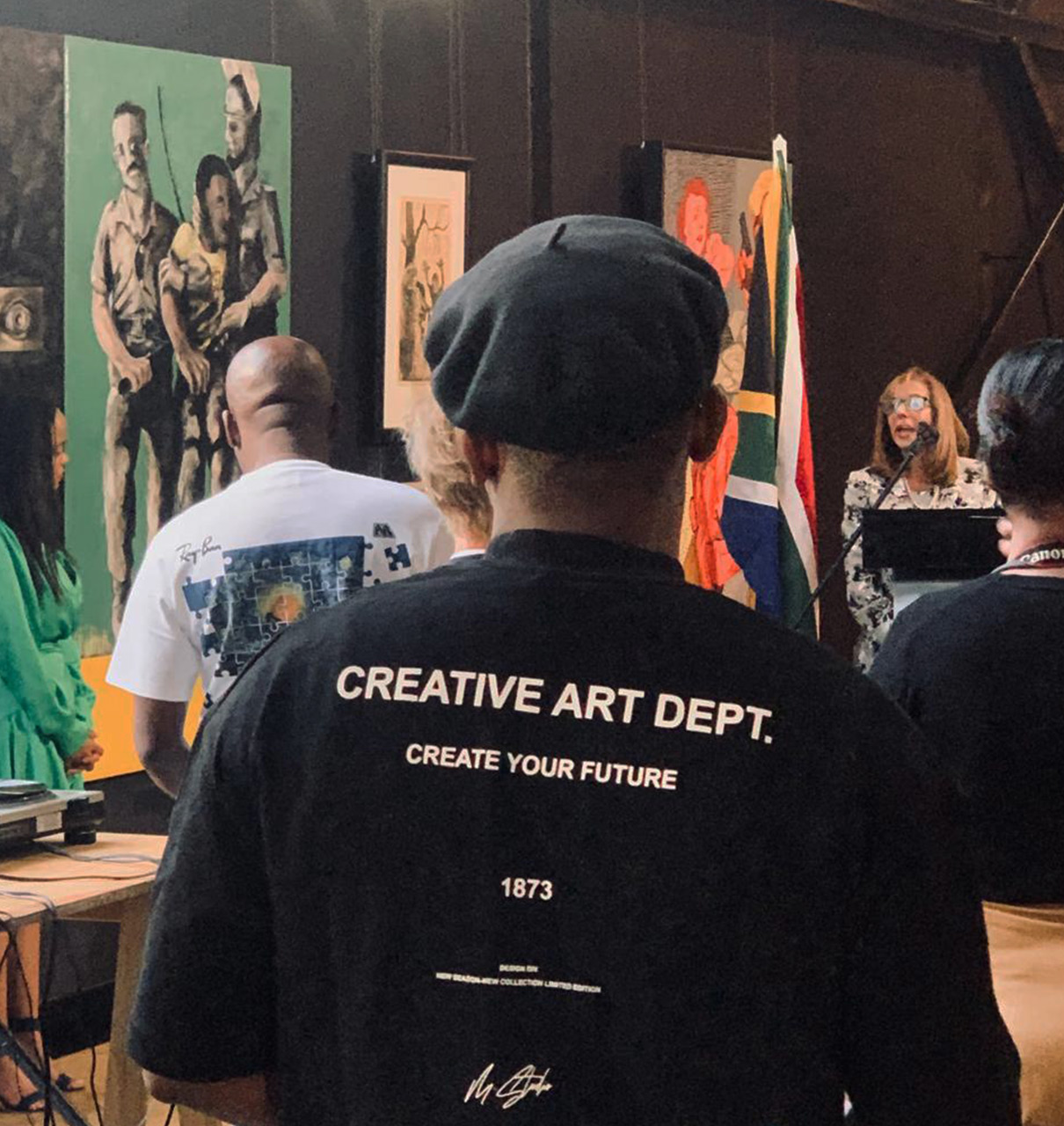
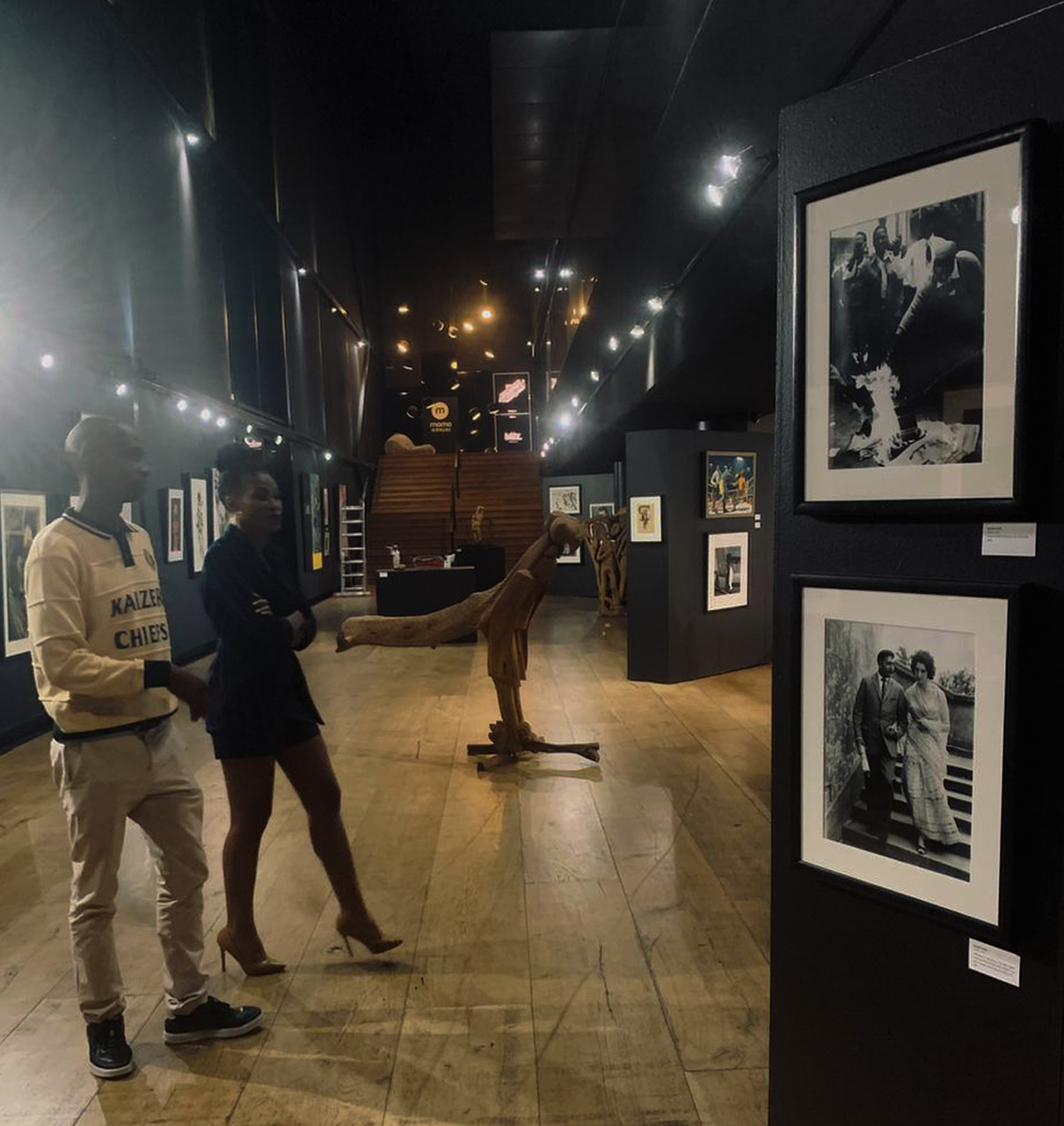
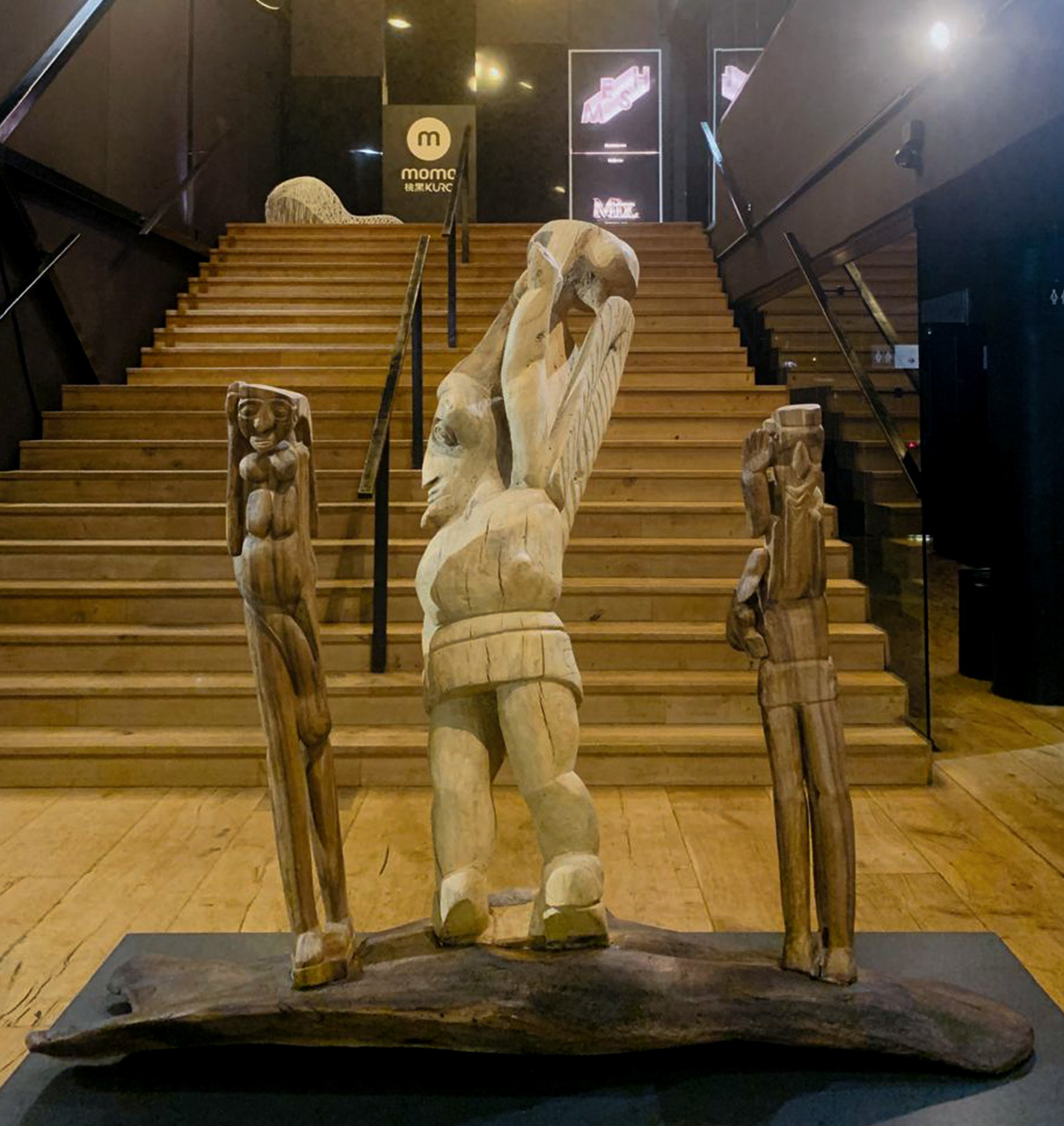
Still We Rise: Artworks from the Ifa Lethu and SABC Art Collections ran at The Atrium, Keyes Art Mile from 30 October – 23 November 2025.
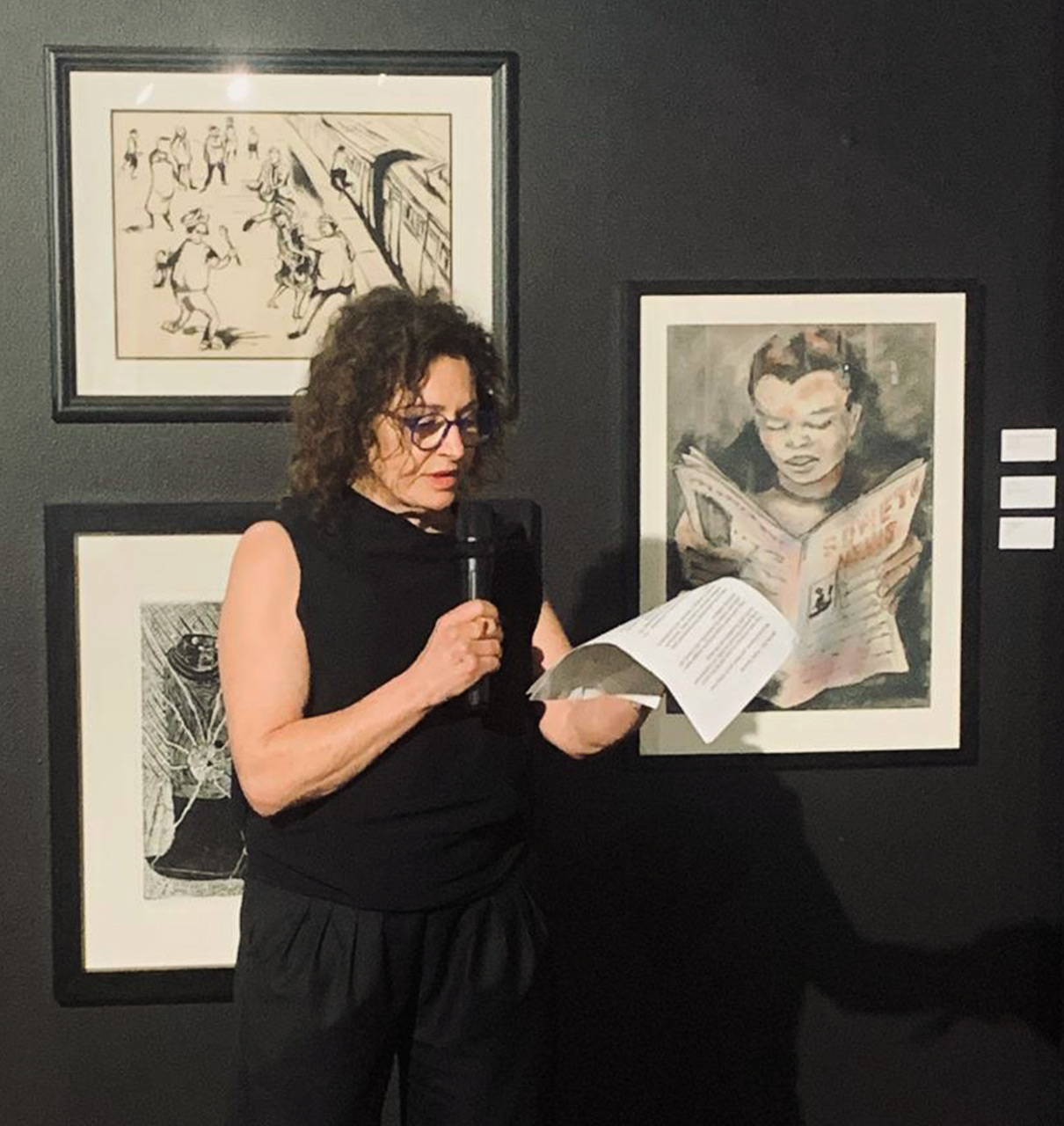
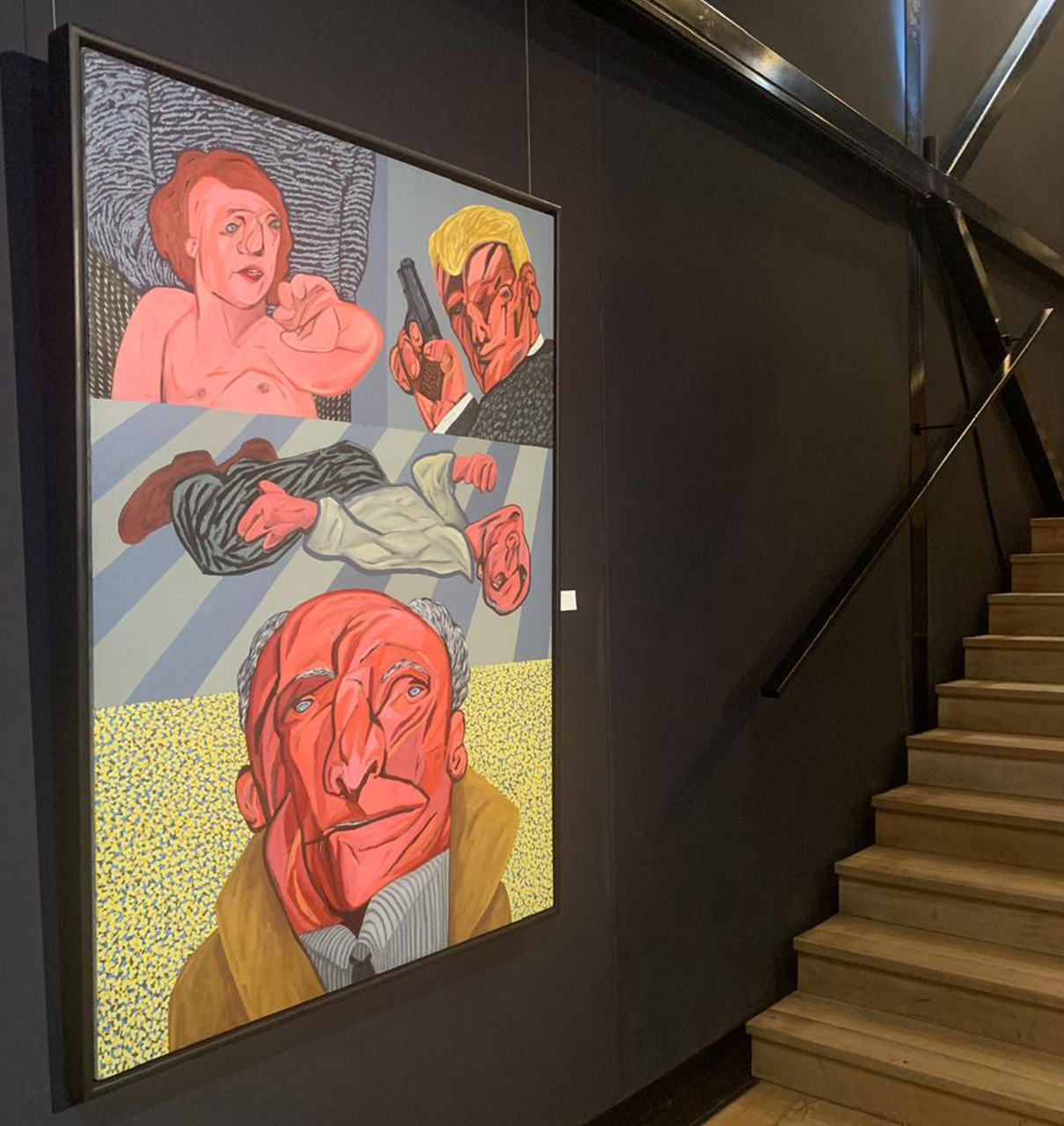
Timed to coincide with the G20 Summit being hosted in Johannesburg, Still We Rise brought together artworks from the Ifa Lethu and SABC Art Collections. Rooted in memory, resistance and resilience, the exhibition showcased artworks created during the years of struggle against Apartheid, with a few works from the post-Apartheid period included for their piercing retrospective gaze. Together, these works highlighted the courage and creativity of artists who persevered despite censorship, exclusion and violent oppression.
In keeping with Ifa Lethu’s inception and continued commitment to repatriating struggle-era artworks and heritage objects that are held in collections outside of the country and returning them to the land of their making, the curatorial focus was on works that were made by South African artists during the struggle era. The SABC Art Collection includes many artworks that predate Apartheid and, significantly, many that were made in the decades after South Africa’s first democratic election in 1994, but for this joint exhibition, the emphasis was on works made between 1948 and 1994.
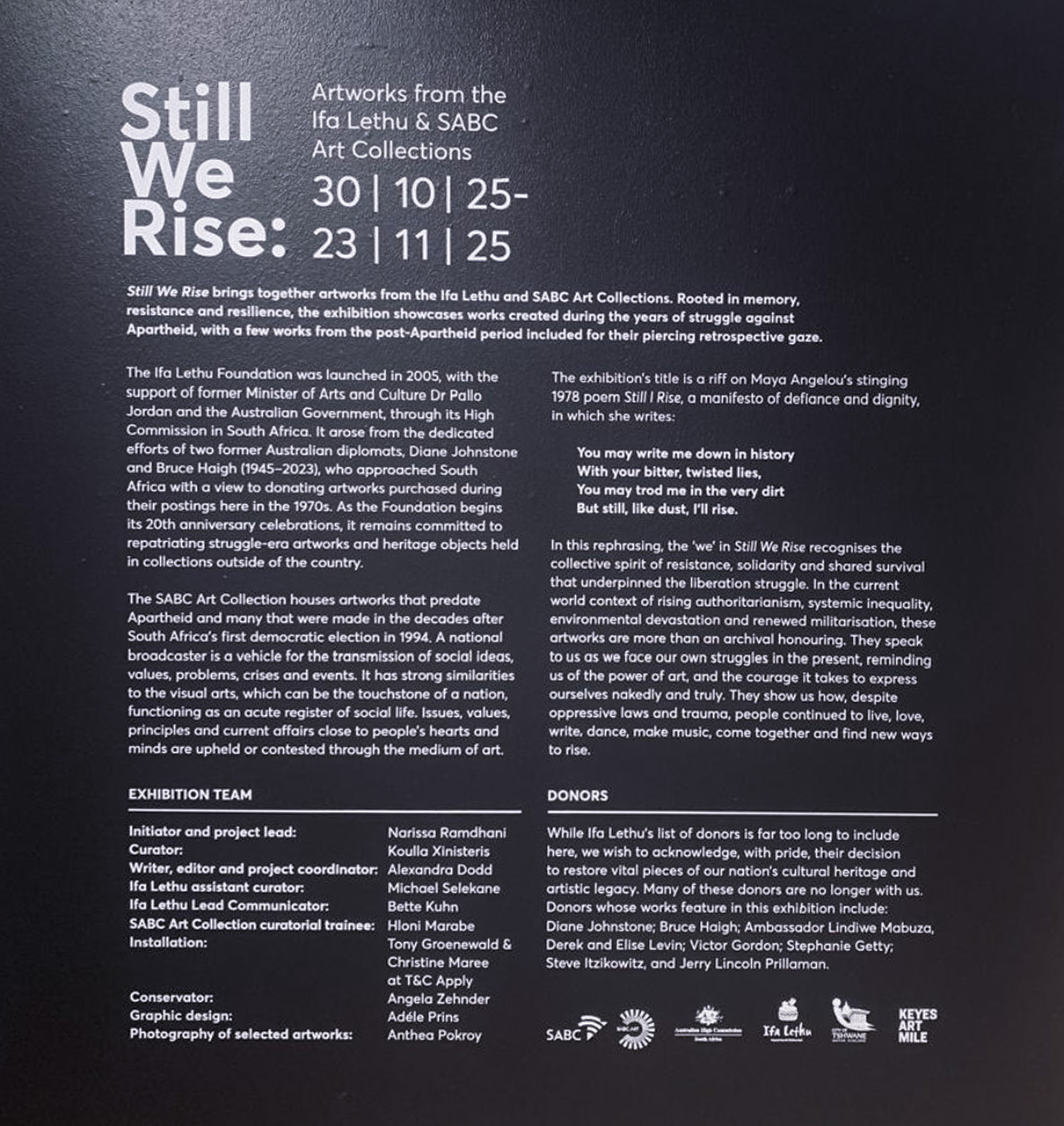
The title of the exhibition is a riff on Maya Angelou’s stinging 1978 poem Still I Rise, a manifesto of defiance and dignity that resonates deeply within the South African context. In it, she writes:
You may write me down in history
With your bitter, twisted lies,
You may trod me in the very dirt
But still, like dust, I’ll rise.
In this rephrasing, the ‘we’ in Still We Rise recognises the collective spirit of resistance, solidarity and shared survival that underpinned the struggle for liberation. In the current world context of rising authoritarianism, systemic inequality, environmental devastation and renewed militarisation, these artworks are more than an archival honouring. They speak to us as we face our own struggles in the present, reminding us of the courage it takes to express ourselves nakedly and truly—and the power of art as a mode of soul connection, social exchange, internationalism, vital solidarity, healing and mutual aid.
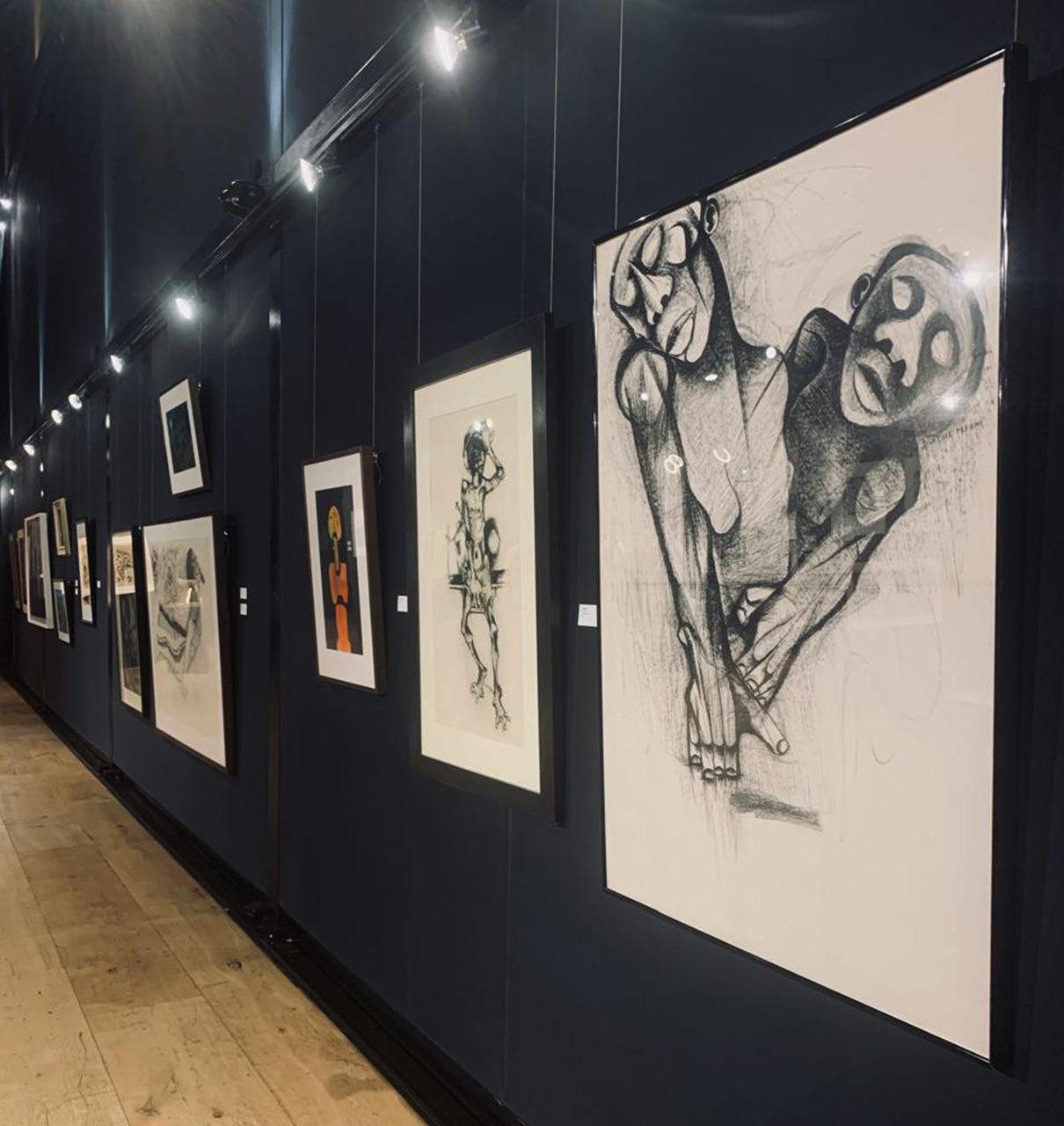
The exhibition included artworks by celebrated, well-known artists, as well as artists who, often due to the constraints of Apartheid, didn’t experience as much of the limelight. These artworks show us how, despite oppressive laws and the trauma suffered, people continued to live, love, write, dance, make music, come together and find new ways to rise and overcome adversity.
The selection from the SABC Art Collection included artworks by: Jackson Hlungwani; Noria Muelwa Mabasa; Johannes Mashego Segogela; Lucas Sithole; Dan Rakgoathe; Albert Adams; Cyprian Shilakoe; Gerard Sekoto; Gladys Mgudlandu; Dorothy Kay; George Pemba; Ranjith Kally; Santu Mofokeng; Jürgen Schadeberg; Julian Motau; Dumile Feni; Sam Nhlengethwa and Paul Stopforth.
Both collections are deeply committed to nurturing creative expression and strengthening the arts, which have long been South Africa’s backbone and our shared line of flight. As the Group of Twenty heads of state travelled to Johannesburg for the G20 Summit, seeking to find solutions to the global economic and financial issues we collectively face, viewers were urged to meditate on the selected artworks, which contain in them that flinty spark that has the power to ignite conscience, consciousness, the potential to serve as a direct call to responsible and ethical leadership at a pinnacle moment in world history.
The Long Journey Home
The Ifa Lethu Foundation is recognised as the largest heritage repatriation organisation in South Africa. It locates, protects and promotes a crucial aspect of our South African heritage—artworks that were created during the struggle era and found their way out of the country during those turbulent years. A Tshwane-based non-profit organisation (NPO), it was launched in 2005 with the support of the former Minister of Arts and Culture Dr Pallo Jordan and the Australian Government through its High Commission in South Africa.
Ifa Lethu arose from the dedicated efforts of two former Australian diplomats, Diane Johnstone and Bruce Haigh (1945 –2023), who approached South Africa in 2003 with a view to donating artwork purchased during their postings in the country in the 1970s.
‘Haigh is probably the only Australian diplomat to have used his diplomatic immunity to help Black activists opposing Apartheid, and the journalists covering them, to escape the South African regime,’ writes Allan Behm in The Guardian. ‘He recognised the formidable political significance of Steve Biko’s role, and managed to smuggle the journalist Donald Woods across the border to Lesotho—a feat portrayed in the 1987 film Cry Freedom, in which Haigh was portrayed by the Australian actor John Hargreaves.’ Haigh is due to be honoured with a memorial plaque at Freedom Park, where South Africa’s unique heritage and cultures are remembered and celebrated.
For her part, recalling those days of repression and resistance, Johnstone writes:
My first interest in the artists was entirely political due to my South African posting as an Australian diplomat. I saw my contact with the artists as a useful way to meet people from the townships and, as many of the artists were politically active, an ideal way to find out through them and their friends more about Black attitudes and aspirations. However, I quickly developed a fascination with the art—which was powerful, vivid, inspirational, frequently strongly political—and developed personal friendships with the artists, many of whom were producing powerful commentaries on Apartheid at a time when other forms of political expression by Black South Africans were banned. [They] were considered subversive by the white government.
Some of the works in my collection were bought either on township visits or when artists came to my home with their work. In August 1974, I hosted an exhibition by Black artists in my apartment in a ‘whites only’ residential area of Pretoria, which attracted attendance by many Black South Africans, fascinated by the art and the event. Neighbours were furious. The apartment owners cancelled the lease. In my absence at work, my apartment was thoroughly searched by male intruders believed to be security police, and there was front-page publicity in South Africa and some in Australia. I told the artists that when Black majority rule came to South Africa I would return my collection to a public gallery, so that all South Africans would see the wonderful work they were producing in difficult times, and against extraordinary odds. It is a promise I kept.
Today, Ifa Lethu continues with this crucial work of repatriating South African struggle-era art and heritage back into the country. At the time of the exhibition, there were are over 550 artworks—paintings, drawings, sculptures, wood carvings and prints—in the Ifa Lethu Collection from 16 countries.
Ifa Lethu is focused on three major issues: the development of cultural/creative entrepreneurs as economic drivers; creating global awareness of the power of South Africa’s cultural production; and creating awareness of human rights abuses. The Foundation has also run numerous youth advancement programmes across the country—ranging from entrepreneurial training (resulting in 800 successful youth businesses being incubated) and internship programmes to art and craft workshops, human rights educational programmes, and poetry and creative writing workshops.
As an NPO, Ifa Lethu has successfully hosted several national and international exhibitions, academic conferences and seminars on art and human rights; implemented a publishing programme; participated in the National Arts Festival in Makhanda; participated in national and international fashion weeks; installed art incubators in Soweto and Mamelodi; and, in an effort to create a more entrepreneurial society, placed products of trainee entrepreneurs in markets such as duty-free stores at airports and in shopping malls. The work of the Ifa Lethu Foundation is driven by the need to boost skills and enterprise development in the creative industries, which include visual art, sculpture, crafts, fashion and design, and with particular reference to rural youth and women.
Art, Resistance and Apartheid’s Afterlives
The mission of the SABC Art Collection is, first and foremost, to establish a public collection worthy of a national broadcaster and representative of the creative output of South African visual artists, both historical and contemporary. It is also our aim to use the Collection to build and broaden understandings of visual art and to further its use as a mode of social engagement.
In curatorial approach, we strive to be representative across race, gender, historical period, style and medium. We seek to inhabit contradiction and evoke emotion through the thoughtful display and juxtaposition of the artworks in the Collection.
As expressed in the Broadcasting Act 4 of 1999, the SABC’s mandate is to encourage ‘the development of South African expression by providing a wide range of programming that refers to South African opinions, ideas, values and artistic creativity’ and, more specifically, ‘enrich the cultural heritage of South Africa by providing support for traditional and contemporary artistic expression’.
A national broadcaster is a vehicle for the transmission of social ideas, values, problems, crises and events. At its best, it conveys, mediates and interprets human action and value. In this, it has strong similarities to the visual arts, which can be the touchstone of a nation, functioning as one of the most acute registers of social life: issues, values, principles and current affairs close to people’s hearts and minds are upheld or contested through the medium of art.
In keeping with this mandate, the SABC Art Collection is devoted to caring for and exhibiting the artworks in the Collection, and honouring the diverse public and personal conditions that gave rise to them.
During the Apartheid years, the SABC Art Collection was informally managed, and was dominated by conventional landscapes, still lifes and portraits – mostly by white artists, due to an acquisition strategy that enacted the structural racism and exclusion that underpinned South African society at large.
After the restructuring of the SABC following South Africa’s first democratic election in 1994, the Collection was formalised under a curator, Koulla Xinisteris, and allocated a budget towards the acquisition of artworks on a basis befitting of our new democracy. This enabled us to acquire numerous iconic works by both emerging and established Black artists—as well as legacy works by earlier generations of Black artists. The work of Black artists was grossly under-represented in the original Collection, so our acquisition policy has consciously sought to address this structural discrimination and exclusion.
The SABC Art Collection is an ongoing and always unfinished project reflecting not only South Africa’s cultural diversity and social realities, but also providing a space for the display of the always emergent creativity and individuality of South Africa’s artists—both established and rising.